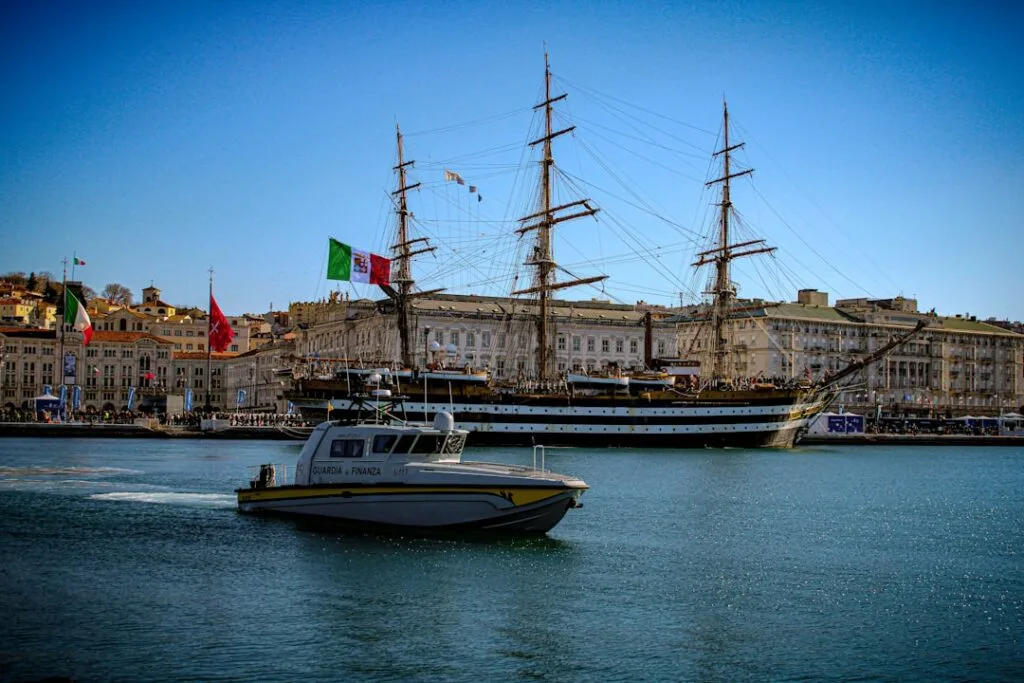






Introduction: Military and Civil Ports — Trieste’s Strategic Heart
Trieste is a city where land and sea keep an uninterrupted conversation — a place shaped by the Adriatic, which has defined its historical, cultural and strategic importance. The ports of Trieste, both military and civil, are the beating heart of that relationship: they are infrastructure, landscape, memory and economic leverage. You can’t fully understand Trieste without its ports; skipping them would be like skipping key chapters in a book. The quays, breakwaters and arsenals tell stories of the Austro-Hungarian empire, international trade, conflict and reconciliation, as well as of industrial modernity, cruise tourism and contemporary leisure boating.
This article offers a practical, informative and detailed guide to Trieste’s main port sites: the civilian organization of the Porto Vecchio and the Stazione Marittima, the commercial and industrial facilities of the Porto Franco Vecchio and the Porto Nuovo, and the military components past and present — arsenals, barracks and the presence of the Guardia Costiera. You will find exact addresses, opening hours, indicative prices, immersive descriptions of the places and local tips for visiting, photographing or simply understanding these strategic spaces. The text is aimed at curious travelers, naval history enthusiasts, maritime professionals and residents wanting to deepen their knowledge of the territory.
Trieste doesn’t display its ports as a simple showcase: they are often evolving areas where industry sits next to public promenades and access is regulated. Some military facilities are closed to the public for security reasons, but there are museums, viewpoints and urban routes that let you grasp their role without crossing any barriers. The civil port offers a range of experiences — from the spectacle of cargo ships and cranes to the calm of pleasure boats — and remains a major entry point for maritime links to Slovenia, Croatia and the eastern Mediterranean.
Finally, this guide includes practical recommendations: the best vantage points at dawn, times to avoid access restrictions, ticket prices for maritime heritage museums, and tips for photographers and professional travelers. Get ready to discover Trieste’s ports as a living geography, where every quay and every arsenal has a story to tell and a role in the city’s strategic balance.
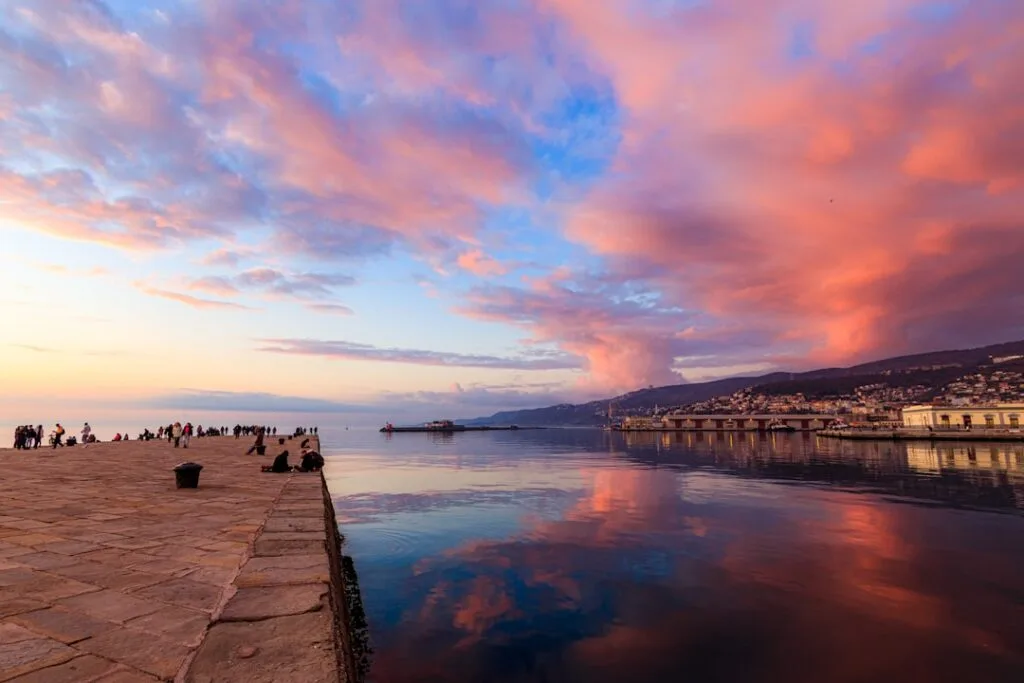
1) Port history and geography in Trieste: origins, empires and reconversions
Trieste’s position at Italy’s north-eastern tip on the Adriatic made it a strategic hub for centuries. From a small fishing village it grew in the 18th and 19th centuries to become the main port of the Austro-Hungarian Empire. Large port works — quays, breakwaters and arsenals — were built to support transcontinental trade: grain, wine, industrial raw materials and exchanges with the East. Today these historic structures coexist with modernized contemporary facilities.
The port areas are split into distinct but connected sectors. The Porto Vecchio, running along the Riva Nazario Sauro, is the public face of the port, with the Stazione Marittima (cruise terminal), an urban promenade and quays open to the public. The Porto Nuovo and the container terminals, located toward the eastern basin, are industrial zones dedicated to freight. You will also find specific port spaces like the Porto Franco Vecchio, a former free-trade area, and military installations that have shaped maritime defense.
Recent changes point to a process of reconversion: brownfield sites rehabilitated, cultural projects on disused quays and the introduction of tourism activities such as cruises and ferry terminals. This transition is sometimes uneven — it coexists with areas still active in commerce — but it gives visitors a layered reading of Trieste’s coastline.
To get oriented:
– Stazione Marittima (Cruise Terminal), Riva Nazario Sauro, 1, 34123 Trieste TS. Public access to the quays depends on ship schedules; the information desk opens according to ship arrivals.
– Porto Vecchio, Riva Nazario Sauro / Riva III Novembre, 34123 Trieste TS: promenade and pedestrian access vary by zone, often open early in the morning until sunset.
2) The military port: arsenals, coastguard and defensive heritage
The military presence in Trieste is visible in restrained architectural lines and in strictly regulated areas. The Arsenale di Trieste, historically located within the port perimeter, housed naval workshops, repair yards and logistical infrastructure for the fleet. Today, some buildings retain military or logistical functions while others have been converted into documentation centers or remain closed for security reasons.
Key entities to note: the Capitaneria di Porto — Guardia Costiera di Trieste — which ensures maritime safety, sea rescue and traffic control. The Capitaneria di Porto is a reference point for recreational sailors and port access management; its headquarters coordinates control activities. Indicative address: Capitaneria di Porto – Guardia Costiera, Riva Pitteri 2, 34121 Trieste (check locally as facilities can be spread out). Opening hours: administrative activities on weekdays, typically 09:00–13:00 and/or by appointment; operational duty is 24/7 for emergencies.
Visits and museums: purely military sites are often closed to the public; however you can visit places related to naval and military memory. The Museo Storico e del Mare (or comparable sections), located near the waterfront, offers exhibits on naval history, uniforms and navigation instruments. Example address: Museo Storico e del Mare, Viale Miramare 1, 34136 Trieste (indicative address: check with the Comune di Trieste). Indicative price: €4–8 for an adult ticket, typical opening hours 09:00–18:00 (closed on certain days).
Practical tips:
– Respect restricted areas: signs and barriers are clear and authorities enforce perimeters.
– Photography: favor public viewpoints (lookouts, promenades along the Riva); avoid shooting through fences into military zones.
– Security and regulations: for professional projects (reports, filming), submit a prior request to the Capitaneria di Porto — authorization may require time and documentation.
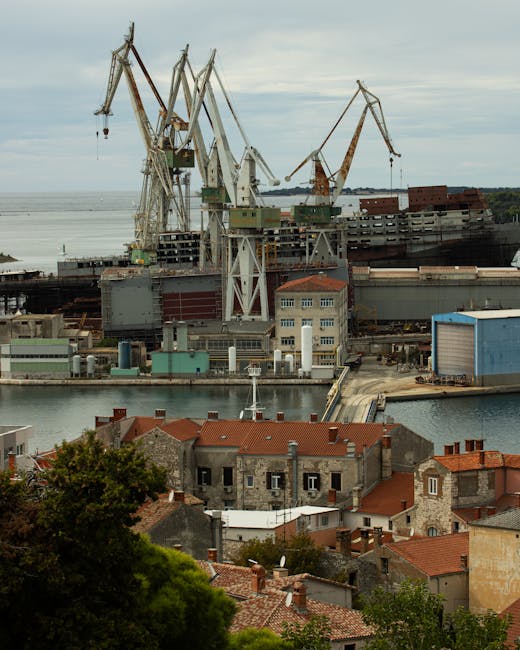
3) The civil and commercial port: Stazione Marittima, container terminals and cruises
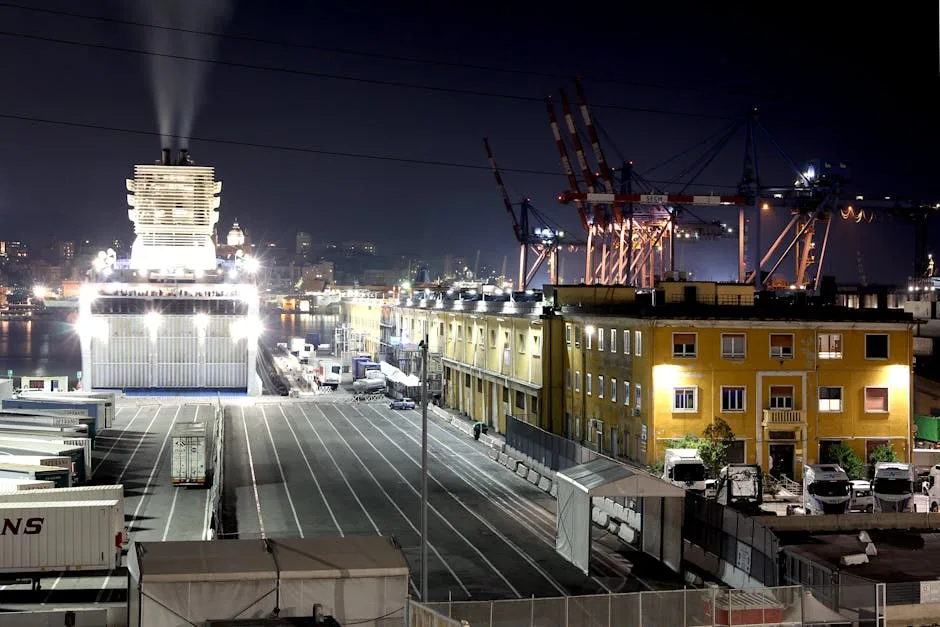
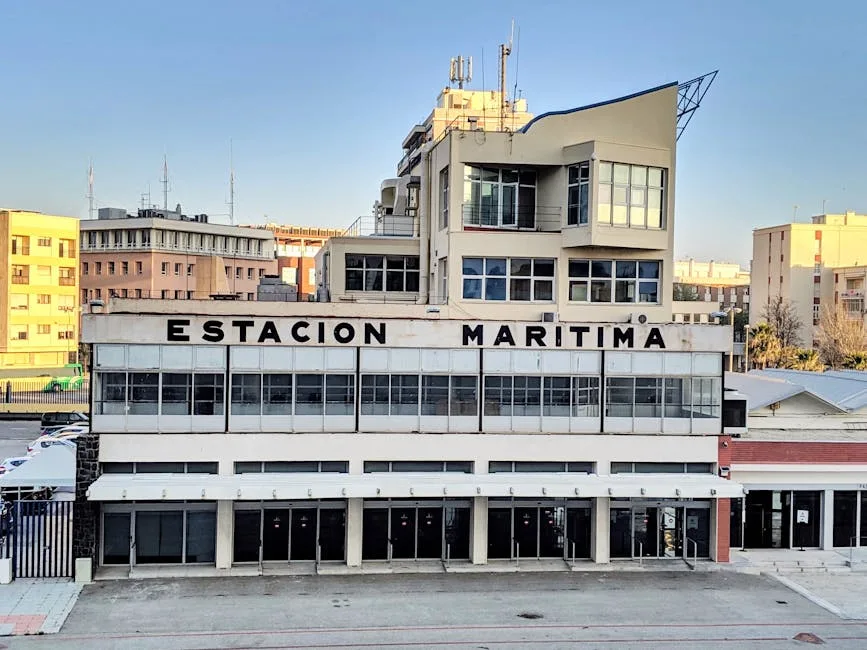
The civil face of Trieste’s port is varied: cruise terminal, commercial quays, container terminals and zones dedicated to fishing and leisure boating. The Stazione Marittima (Cruise Terminal) is the passenger reception point and sits on the Riva Nazario Sauro. Exact address: Stazione Marittima – Riva Nazario Sauro, 1, 34123 Trieste TS. Reception hours vary with ship rotations; the terminal is usually active from 06:00 for morning arrivals and can remain open until 22:00 when there are late departures.
For travelers: services at the terminal include information desks, luggage storage sometimes available via private operators, taxis and shuttles. Prices: taxi transfer to the city center (Piazza Unità d’Italia) about €10–15 depending on the ride; airport/shuttle/local navigation fares vary €1.50–6.
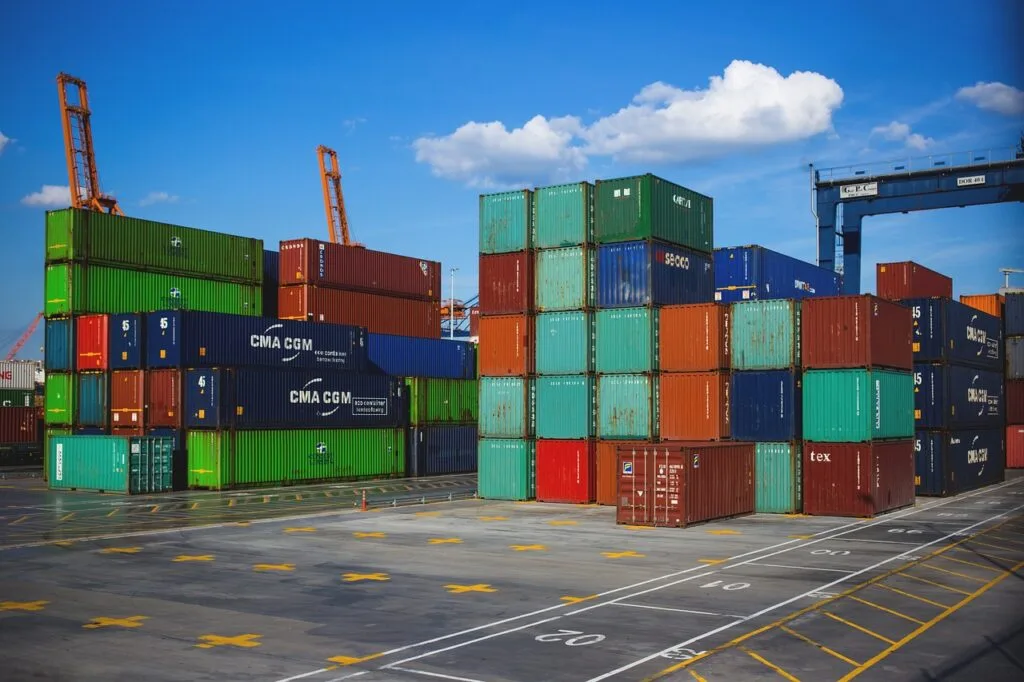
Container terminals and logistics platforms are concentrated in the eastern industrial zone of the port. The Port of Trieste is one of Europe’s deepest ports, able to host large ro-ro and bulk carriers. Industrial quays operate 24/7; access to loading quays is strictly regulated and controlled by pass.
Marinas and fishing: the Porto Vecchio also includes leisure areas and basins where you’ll find yacht clubs and small-boat shipyards. Useful addresses:
– Circolo Nautico Muggia (local club), Via dei Mille 12, 34100 Trieste (hours vary; membership required for some services).
– Marina San Giusto (marinas), Via dei Legionari 9, 34121 Trieste: berth rentals, provisioning services and shipyards. Prices: mooring fees vary (by hours/days), often billed daily or annually; expect €20–50 per night for small/medium boats in high season.
Visitor tips:
– To observe port activity, aim for an early start: 06:00–09:00 is when cargo operations are most visible and the light is ideal for photography.
– For ferries or crossings, check timetables online (local operators) and arrive 60–90 minutes before departure.
– For guided civil port tours, check with the Ufficio Turistico di Trieste (Tourist Office): Punto Informazioni Turistiche, Piazza Unità d’Italia, 4, 34121 Trieste — opening hours 09:00–18:00 in high season; tour prices vary (€15–30 depending on duration).
4) Suggested routes and recommended viewpoints
Exploring Trieste’s ports takes some planning to balance public access, viewpoints and respect for protected areas. Here’s a half-day sample route and must-see vantage points.
Suggested half-day itinerary:
– Start: Piazza Unità d’Italia — a central hub with easy tram/taxi access. Take a moment to watch the transition between the square and the port.
– Walk along the Riva Nazario Sauro: follow the promenade to the Stazione Marittima (Riva Nazario Sauro, 1). Estimated walk time 20–30 minutes from Piazza Unità.
– Molo Bersaglieri viewpoint: a small public pier offering close views of boats and freight quays; excellent for photography. Approximate address: Molo Bersaglieri, 34121 Trieste.
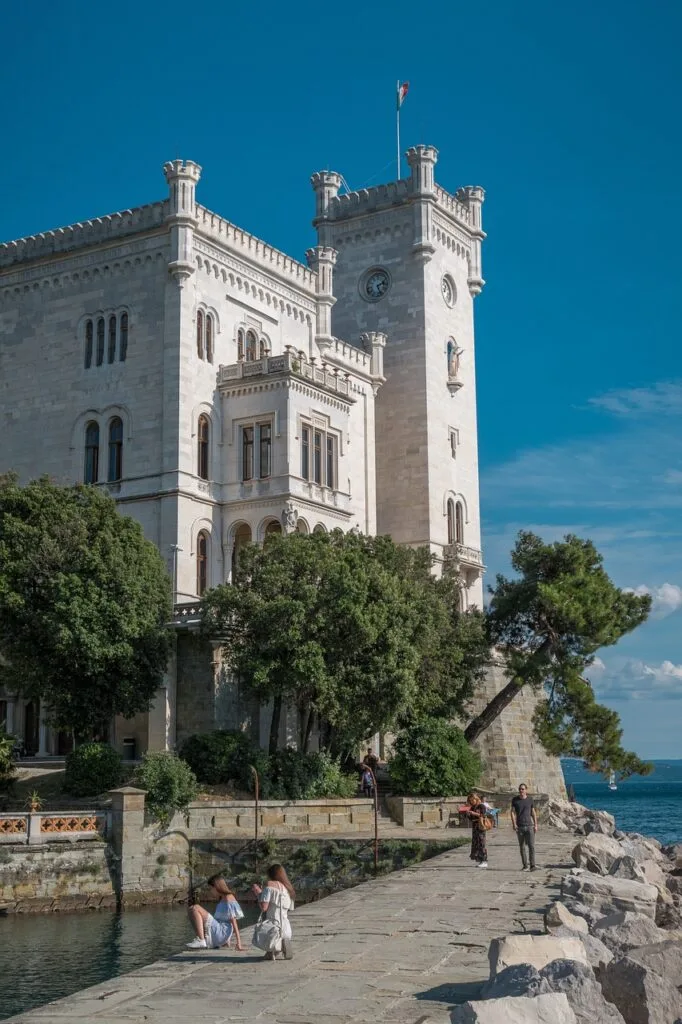
– Miramare vantage point: for a panoramic outlook, Castello di Miramare (Viale Miramare, 1, 34151 Trieste) provides a view of the estuary and coast; park and castle hours generally 09:00–18:00 (seasonal). Castle ticket: €6–10 for adults (check on arrival).
Other viewpoints:
– Molo Audace: very central, ideal for watching passing ships and the comings-and-goings of small boats; address: Molo Audace, 34121 Trieste.
– San Giusto Hill (Colle di San Giusto): elevated view over the port and city, perfect at sunset; access via Via del Teatro Romano / Via del Castello.
– Foce del Timavo viewpoint (further afield): for maritime geography enthusiasts, this stretch of coast shows the relationship between river outflows and port infrastructure.
On-the-ground tips:
– Comfortable shoes: some sections of the quays are cobbled or industrial.
– Follow signage: restricted areas, control points and cameras are in place.
– Food and drink: bars and cafés along the Riva serve coffee and snacks; typical prices: espresso €1–1.50, panini €4–8, casual meals €12–25.
– Photography: avoid shooting too close to industrial installations without permission; use longer lenses from public lookouts.
5) Economic role and outlook: logistics, cruises and the free-trade zone
The Port of Trieste plays a strategic role in European logistics. With deep basins and a gateway position between Central Europe and the Adriatic, it attracts freight flows headed to Germany, Austria, Eastern Europe and the Balkans. Trieste’s port system combines specialized terminals (containers, ro-ro, refrigerated) with transshipment services.
Cruise tourism is another major pillar: the Stazione Marittima welcomes thousands of passengers each season. Local benefits for hotels, restaurants and retail are tangible: a medium-sized cruise ship can put several hundred to thousands of passengers ashore, generating direct tourist spending. For cruise reception:
– Stazione Marittima – Riva Nazario Sauro, 1, 34123 Trieste TS — shuttle services and pedestrian access to the city center.
The historic free-trade zone (Porto Franco Vecchio) is another distinctive feature: originally created to attract commerce and warehouses, it shaped Trieste’s economic margin. Today some sections still enjoy advantageous tax statuses or specialized logistical uses. Sustainable development and the conversion of industrial wastelands into cultural or mixed-use spaces (offices, light logistics) are priorities in the port plan.
Future outlook:
– Modernizing terminals to host next-generation vessels.
– Expanding « green port » initiatives (shore power for berthed ships, emissions reductions).
– Strengthening rail-road links to improve intermodality to the hinterland.
Tips for professionals:
– Contact the Autorità di Sistema Portuale del Mare Adriatico Orientale (Port Authority) for technical information, terminal access and regulations. Main office: Piazza della Borsa / via Armando Diaz (administrative address: check with the port). Typical office hours: 09:00–17:00 on weekdays; operations service 24/7.
– For freight and logistics operators: plan for port access visas, vehicle registration and environmental safety permits.
Conclusion: Trieste — a multifaceted port blending memory and future
Trieste’s military and civil ports form a complex tapestry where history, geopolitics and economics meet. From the historic Arsenale to the modern quays of the Stazione Marittima, the city has maintained a strong and adaptable maritime identity. Attentive visitors can read these transformations in the stones of the quays, the roar of the cranes, the movement of ships and the signs marking sensitive areas. Yet they will also find an open city: promenades along the Riva, museums, lookouts and observation points that allow understanding without crossing security lines.
For travelers, combining curiosity with respect for the rules is essential: many sites are accessible, but others are reserved for authorized personnel. The practical information provided in this guide — precise addresses like the Stazione Marittima (Riva Nazario Sauro, 1, 34123 Trieste TS), landmarks such as Molo Audace or Castello di Miramare (Viale Miramare, 1, 34151 Trieste) and approximate pricing — will help plan visits and photo shoots. Remember to check current hours and prices before you go: terminals, museums and port services often adapt their schedules based on the season and ship traffic.
Economically and strategically, Trieste remains a key Adriatic player: infrastructure modernization, decarbonization efforts and improved connectivity are ongoing projects. That means the city is dynamic, evolving and full of opportunities — for tourism, logistics and urban observation — while preserving a deep maritime memory. Whether you’re a photographer chasing the perfect dawn shot, a historian interested in the Austro-Hungarian arsenal, a maritime professional or a casual stroller, Trieste invites you to read its ports like a living geography, always in motion.
Final tip: join a guided tour organized by the local tourist office (Punto Informazioni Turistiche, Piazza Unità d’Italia, 4, 34121 Trieste; indicative hours 09:00–18:00 in high season) for up-to-date information, access to secure viewpoints and a fuller understanding of current issues. And don’t forget: the sea is to be felt, breathed and heard — the most strategic port is often the one that makes you feel most alive.