





Introduction — Adriatic Walks: Trieste’s Secret Quays
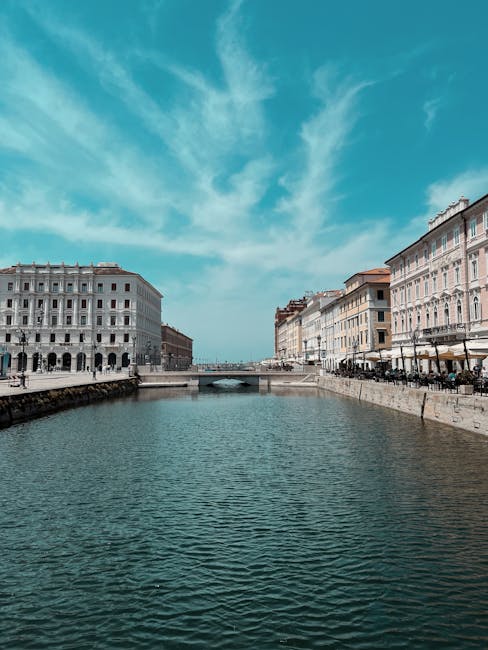
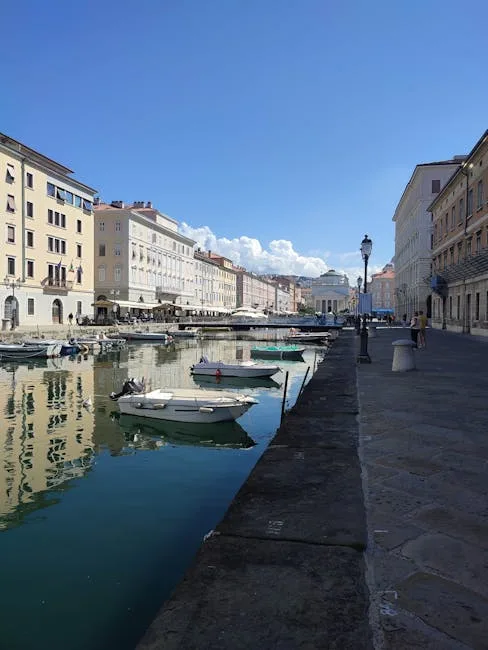
Perched where Italy meets Slovenia and still marked by its Austro-Hungarian past, Trieste is a city of contrasts and salty silences. Its quays stretch along a shifting blue sea, where the Adriatic laps stone piers, weathered staircases and promenades lined with century-old cafés. Walking Trieste’s waterfront is like reading a city in slow motion: the smell of coffee mixes with sea spray, gulls gossip about ferry timetables, and baroque, neoclassical and modern façades tell stories of empire, trade and exile.
This guide nudges you off the obvious tourist trails to discover the “secret” quays — not hidden behind fences, but tucked away in moments of attention: small coves where locals come to fish at dusk, discreet footpaths, stairways opening onto pebble inlets, and terraces where you sip prosecco while watching freighters glide toward the port. As a quintessential port city, Trieste invites contemplative wandering; every jetty has its own microcosm, every pier its rhythm.
In this article I’ll take you along the lesser-known quays and shores: from the alleys around Molo Audace to lanes descending toward the Baia di Sistiana, with the striking Castello di Miramare keeping watch on the horizon. I’ll list concrete details (full names, exact addresses), opening hours, current prices in euros and practical tips for the best moments of the day: sunrise, golden hour or starry nights. You’ll find places to eat, historic cafés like Caffè degli Specchi and Caffè San Marco, cultural highlights such as the Teatro Romano di Trieste and Museo Revoltella, plus wilder spots for anyone craving a direct connection to the Adriatic.
Whether you’re a photographer, an urban hiker, a history buff or simply a lover of the sea, Trieste’s quays offer views and sensations to be savored slowly. This route favors walking and lingering over superficial curiosity. I’ll suggest routes, the best times to visit each spot, tips for avoiding crowds and recommendations for a picnic or a quick coffee. Let’s set off on a promenade where every pier becomes a vantage point and the Adriatic coast secrets reveal themselves to those who take the time to look.
Main Quays: Piazza Unità d’Italia and Molo Audace
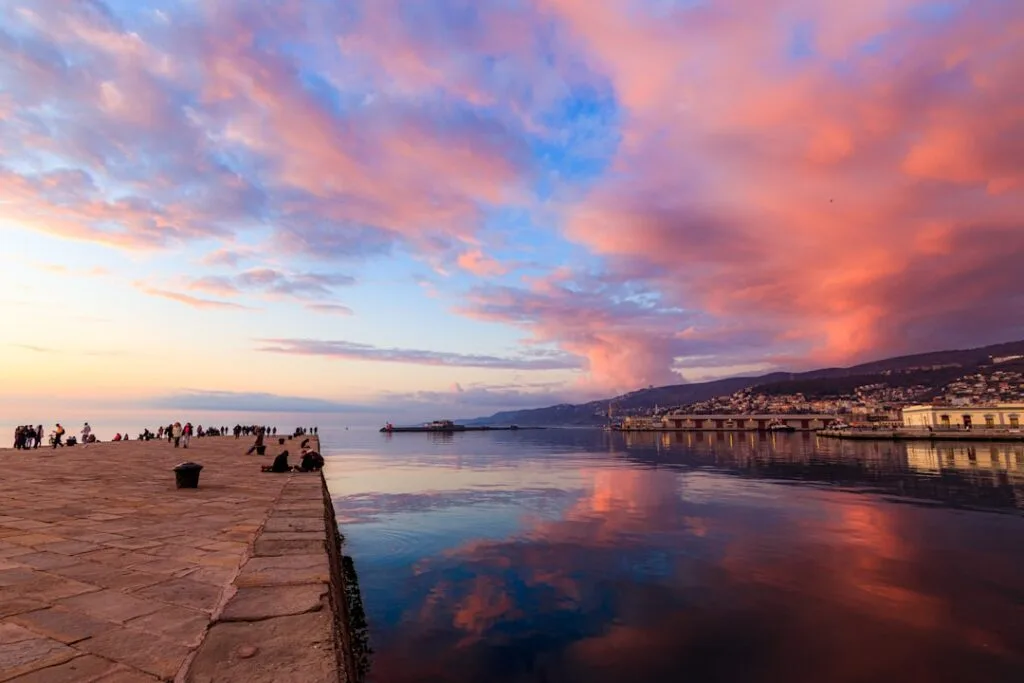
Piazza Unità d’Italia is the beating heart of Trieste and the natural starting point for a waterfront walk. Officially Piazza Unità d’Italia, 34121 Trieste, this sea-facing square is flanked by grand palaces like the Palazzo del Municipio (Piazza Unità d’Italia 4, 34121 Trieste) and the Palazzo del Governo (Piazza Unità d’Italia 2, 34121 Trieste). The square is open 24/7 and access is free. Depending on the season, evening events can sometimes close parts of the quay for concerts or public gatherings; check the Comune di Trieste calendar before planning a nighttime visit.
A short stroll away, Molo Audace juts into the sea like a tongue of stone. Molo Audace, Riva Nazario Sauro 1, 34121 Trieste — accessible at all times — is perfect for watching fishing boats, yachts and ferries. The quay is flat, paved and ideal for morning walks. Rows of benches provide perfect stopping points to gaze at the horizon. Practical tip: the softest light is at dawn or during the evening golden hour; at midday contrasts are strong and it can be very bright.
Nearby, Caffè degli Specchi (Piazza Unità d’Italia 2, 34121 Trieste) is an institution for a terrace break. Approximate opening hours: 8:00–23:00. Indicative prices: espresso from €1.40; cappuccino around €2.50. For local pastries try a presnitz or a strudel with your coffee. Another historic café is Caffè Tommaseo, Via Battisti 18, 34125 Trieste (open roughly 7:30–22:00; drinks €1.50–3.50).
Practical details: the piazza is well served by urban buses (ACTV / Trieste Trasporti); main stops are Piazza Unità and Municipio. Parking: Parcheggio Sant’Andrea (Via del Torrente 1, 34124 Trieste) and Parcheggio Riva Nazario Sauro. Beware of peak tourist times (May–September) when terrace café prices can rise by 10–20%.
 Click here to discover Trieste’s historic cafés
The Hidden Maritime Heart: Riva del Mandracchio and the Old Port
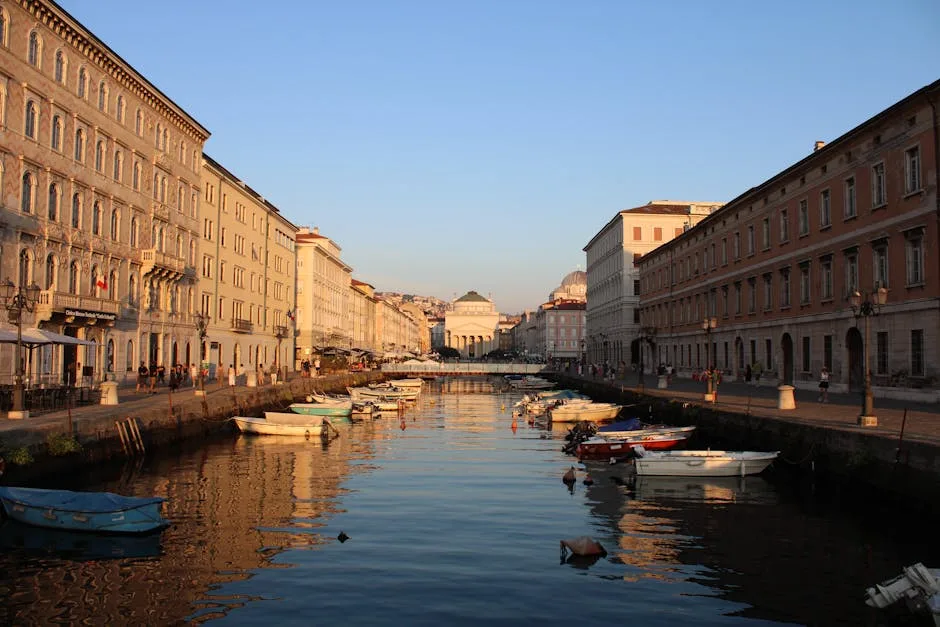
Just east of Piazza Unità, Riva del Mandracchio shows a more industrial, intimate side of the waterfront. Riva del Mandracchio, 34121 Trieste, stands out with its warehouses, workshops converted from old storage spaces and small quays where fishermen hang their nets. Walking here lets you feel the city’s working port life: the smell of oil and salt, the calls of workers and wind-sculpted silhouettes.
Porto Vecchio (Viale Miramare 4, 34123 Trieste for the main access to the historic port areas) is being rediscovered through cultural initiatives; temporary exhibitions and craft markets sometimes take place here. Access is usually free except during special events. For photographers, the shadow plays created by cranes and hulls at dusk offer striking compositions.
Nearby, the Museo del Mare (part of local exhibitions) is sometimes listed in municipal cultural programs; temporary shows are often hosted in renovated port spaces. Prices and hours vary by exhibition, but expect entrance fees between €3 and €8 for local displays.
Practical tips: bring a windbreaker even in summer, as the Tramontana (north wind) can be biting on the quays. If you want to meet local fishermen, go early: between 6:00 and 9:30, when catches are unloaded and sold on the quay. For a simple seafood meal, try Ristorante Al Bagatto, Riva del Mandracchio 10, 34121 Trieste (open 12:00–15:00 and 19:00–23:00; mains €12–25), or hunt for small konobi and osterie behind the warehouses for heartier, more authentic fare.
Between History and Views: From the Roman Theater to Castello di Miramare
Follow the Riva east along the coast and you’ll reach one of the city’s most historic blocks: the Teatro Romano di Trieste (Via del Teatro Romano, 34121 Trieste). The theater, built in the 1st century BC, is partially integrated into the modern urban fabric and makes for a moving archaeological stop. Address: Via del Teatro Romano, 34121 Trieste. Hours: generally free to view from outside; occasional guided tours as part of cultural programming (inquire at the Ufficio Informazioni Turistiche, Piazza Unità d’Italia 4). Fees: exterior access free; guided visits paid depending on the event (around €3–6).
Continue along the lungomare and take bus no. 6 or drive to Castello di Miramare (Viale Miramare, 34151 Trieste). Castello di Miramare is one of the most unforgettable vantage points over the Adriatic. Full address: Castello di Miramare, Viale Miramare 1, 34151 Trieste TS, Italy. Opening hours: generally 9:00–19:00 (last admission 18:00) from April to October; reduced hours in low season (10:00–17:00) — check before visiting. Fees: castle + park entry around €10 for adults; park only is free. Inside the castle you can admire 19th-century salons, woodwork, period objects and sweeping bay views.
The trip to Miramare is rewarded by the Parco di Miramare, a large botanical garden surrounding the castle where cypresses, maritime pines and exotic species mingle. Tips: allow at least 2 hours for the castle and park. In summer, English guided tours may be limited; book in advance via the official site if possible. From the coastal promenade to Miramare you’ll find small coves reachable on foot — rocky surfaces, so wear good shoes. For a romantic moment, the castle terrace at dusk is spectacular.
Practical: shuttle from the city center — ACTV bus line 6 (direction Barcola/Miramare); single ticket about €1.30 (valid 75 minutes). Miramare parking: Parcheggio Miramare, Viale Miramare, 34151 Trieste — rates vary by season, often €2–4 per hour. Nearby restaurants: Ristorante Al Bagatto di Miramare, Viale Miramare 60, 34151 Trieste (open 12:00–23:00; mains €15–30) for refined seaside dining.
Click here to book your ticket to Miramare Castle
Wild Coves and Baia di Sistiana: An Eastern Coastal Escape
If you prefer wilder spots, head east of Trieste toward Baia di Sistiana and the Duino Riviera. This route leaves the urban center and is best covered by car or bike from Trieste (about 20–30 minutes depending on traffic). Baia di Sistiana is located along the SP1 (Strada Provinciale 1), with the main access via Via Litoranea 51, 34010 Duino-Aurisina (TS). Paid parking is available near main beaches (daily rates around €5–10 in high season).
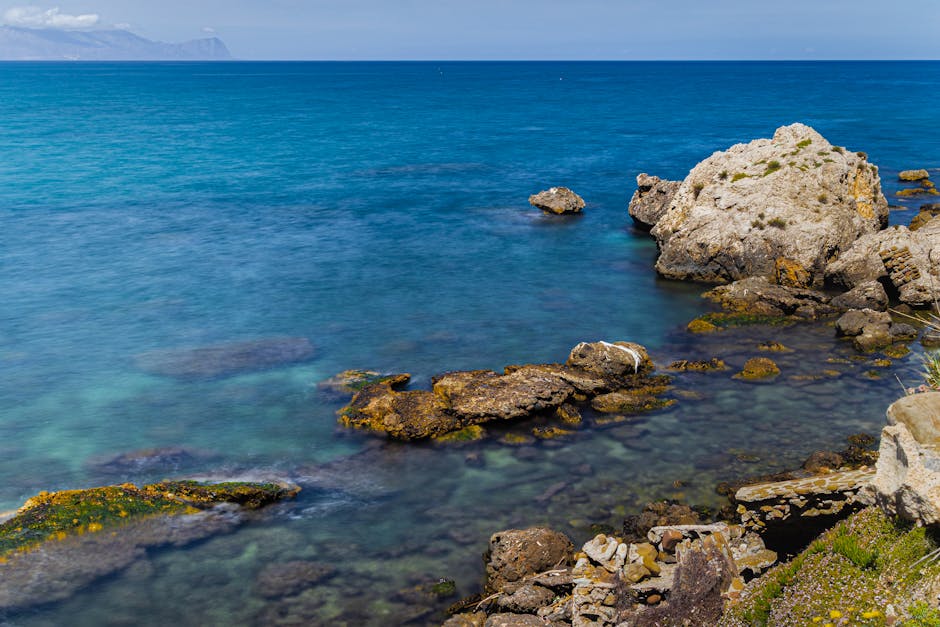
The bay offers clear water, pebbly coves and areas set up for swimming. At low tide some rocks provide seating facing the sea and good views of the seabed. Local activities include diving, snorkeling and kayak excursions. Several schools and rental operators are active throughout the summer; kayak rental prices roughly €15–30 per hour, guided trips and courses €30–60 depending on duration.
For a more challenging hike, take the trail linking Sistiana to Duino and Castello di Duino (Castello di Duino, Via Castello di Duino 1, 34011 Duino TS). The castle crowns dramatic cliffs and provides sweeping coastal viewpoints. Hours: the castle grounds are often open to the public, but the interior can be closed for private events; access usually until 17:00 in low season and 19:00 in high season. Fees: park access free; interior visits vary (€5–10 depending on programming).
Practical tips: bring sturdy footwear, sunscreen and water — trails can be exposed. If you plan a picnic, buy fresh bread and cheeses first at a Trieste bakery (for example Pasticceria La Bomboniera, Via Dante Alighieri 9, 34132 Trieste). There are fewer public toilets in the area; plan stops accordingly. Also respect local regulations protecting the cliffs and private properties: don’t leave trash and stick to marked paths.
Click here to go kayaking along the Duino coast
Practical Tips for Enjoying the Quays and Useful Info
Preparing for an urban hike along Trieste’s quays means keeping a few simple but essential things in mind. Here’s a set of practical tips, hours and prices collected so your visit is pleasant and free of surprises:
- Transport: Trieste Trasporti urban buses serve the center well and some lines reach Miramare and Barcola. Single ticket (urban zone) about €1.30; book of 10 tickets ≈ €12. Main stops: Piazza Unità d’Italia, Municipio and Stazione Centrale. Taxis are available but pricey for short trips (from the station: first minute €3–5 then €1.50–2.00/km).
- Tourist hours: Most outdoor sites are accessible 24/7. Museums and castles have varying hours: Castello di Miramare 9:00–19:00 (€10), Museo Revoltella (Via Armando Diaz 27, 34124 Trieste) open 10:00–18:00 (closed Monday; entry €6–8), Teatro Romano exterior access free.
- Restaurants and cafés: Caffè degli Specchi (Piazza Unità d’Italia 2) 8:00–23:00; Caffè San Marco (Piazza Quarantia / Via Battisti 18) 7:30–22:00; drinks €1.40–3.50. For a meal expect €15–35 per person in a coastal trattoria.
- Safety and comfort: Bring a windbreaker, sturdy shoes for rocky surfaces, a hat and water in summer. Quays are generally safe but avoid unlit, unmarked areas at night. For swimming, prefer supervised beaches during the season.
- Best times to visit: April–June and September–October for mild weather and fewer tourists. July–August is high season — hotter and busier.
Finally, respect local life: Trieste has a strong identity shaped by café culture and maritime traditions. Strike up a conversation with café owners or fishermen, try a capo in piedi (a coffee taken standing at the counter) to get a feel for the local rhythm, and let yourself be carried by Adriatic slowness. The city’s secret quays are often found down a stairway or behind a doorway — keep your eyes open and walk slowly.
Conclusion — Why These Quays Deserve Your Meandering
Trieste’s quays offer far more than postcard views: they are living spaces where history, the sea and daily life constantly meet. Each jetty, from Molo Audace to the coves of Baia di Sistiana, reveals a different side of the city — from civic grandeur to intimate port life. By walking slowly you’ll discover historic cafés with their ingrained routines, museums tucked in neoclassical palaces, castles watching over the Adriatic and little spots where locals recharge after a day’s work.
Trieste’s richness lies in its micro-moments: a fisherman untangling a net at dawn, a terrace sharing a glass at sunset, a secret stairway down to a small pebble beach. The practical information in this article — exact addresses, approximate hours, prices in euros and local tips — will help you plan without stress while leaving room for the unexpected. Always double-check hours and fees before you go; cities change and events can alter access to certain areas.
For the photographer, sea-lover or curious stroller, Trieste offers images and sensations at every step. Take the time to watch light on stone, listen to the stories the quays whisper and taste the port cuisine. And remember: the “secret quays” aren’t hidden on a map but found in moments of discovery; they come to life through attention. So follow the sound of the waves and the voice of the quays — Trieste will tell you its story, one walk at a time.