





Introduction: The Call of Night in Trieste
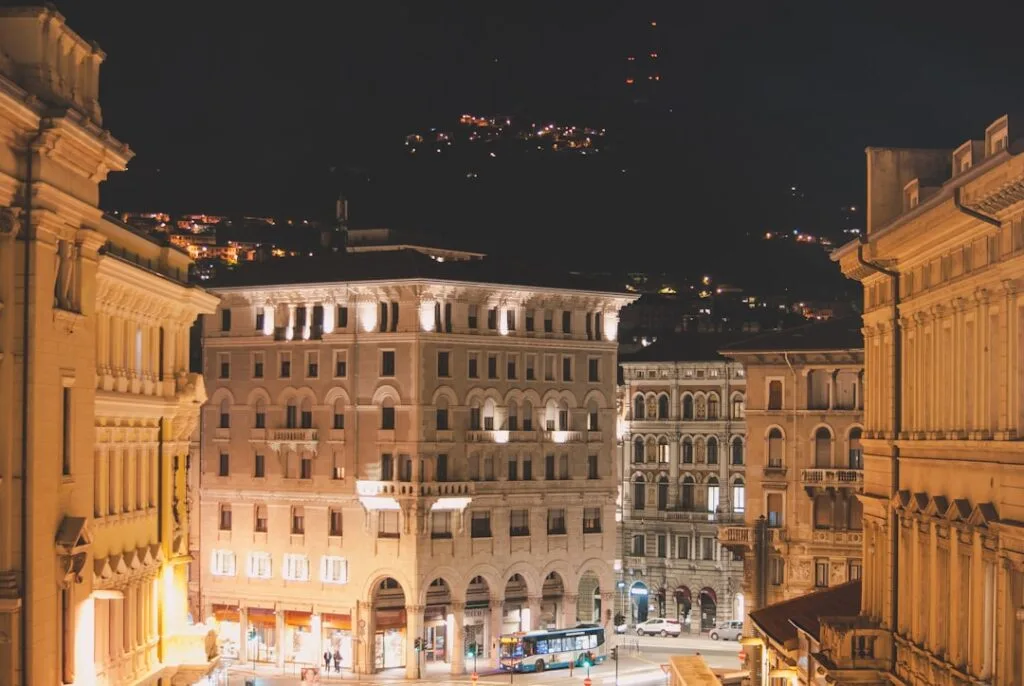
Trieste, a port city at the crossroads of Latin, Germanic and Slavic cultures, takes on a different rhythm after sunset. Neoclassical and Austro-Hungarian façades gather a coat of mystery; historic cafés close late, letting music and hushed conversations spill into the streets. A nighttime stroll through Trieste’s mysterious quarters is more than a walk: it’s a sensory initiation where the smell of coffee meets the salty Adriatic breeze, and where every alley seems to hold a story shaped by time and the city’s shifting history.
Starting an evening in Trieste often means beginning at the wide expanse of Piazza Unità d’Italia, Europe’s largest square opening onto the sea, then letting yourself be guided by lanterns, art‑nouveau streetlamps, wrought‑iron balconies and hidden stairways that lead down to tucked‑away waterways. Monuments—the Piazza Unità d’Italia, the Canal Grande, the Castello di San Giusto, the Roman Theatre, the Risiera di San Sabba—reveal themselves from a different angle. They create moods that can be dramatic or tender, perfect for daydreaming and reflection.
This night walk I’m suggesting is both practical and immersive. You’ll find recommended routes, exact addresses, opening hours and prices where relevant, plus safety and local‑etiquette tips to make the most of the city after dark. Whether you’re a photographer chasing the perfect twilight light, a history lover drawn to atmospheres, or a curious traveler wanting to eavesdrop on the city’s whispers, this guide will help you navigate Trieste at night with confidence.
Throughout the sections we’ll move together through the main nocturnal scenes: the majestic Piazza Unità d’Italia, the canals and lanes of the old town, the quiet strangeness of the Castello di San Giusto quarter and the poignant memory of the Risiera di San Sabba. Each stop includes practical details—exact addresses, indicative prices in euros, opening hours for visits (when nighttime access exists), and local recommendations for eating, drinking or taking a taxi. The mental images you build will be reinforced by visual suggestions for photographing the city and tips to avoid tourist traps. Lace up your walking shoes: Trieste at night is to be earned and savored.
Piazza Unità d’Italia and the Waterfront: The Grand Seaside Stage
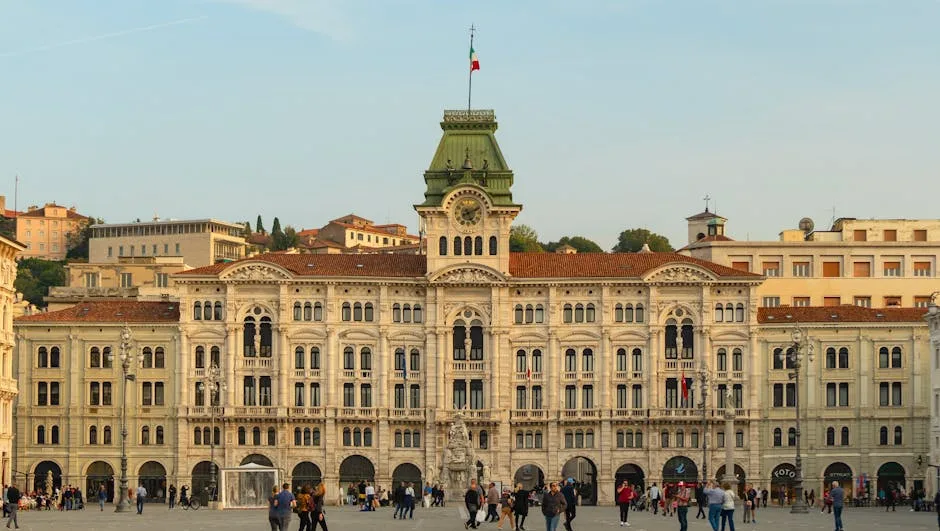
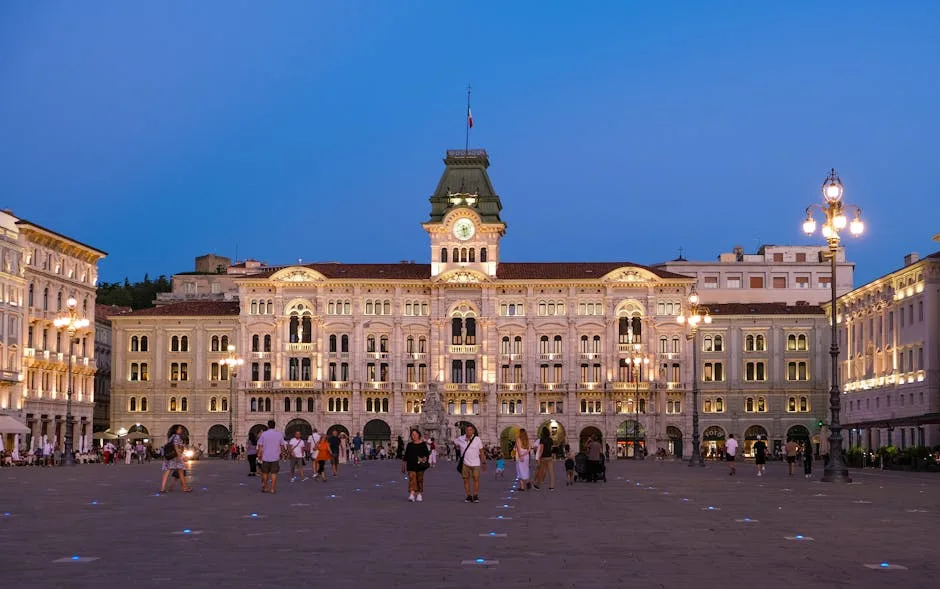
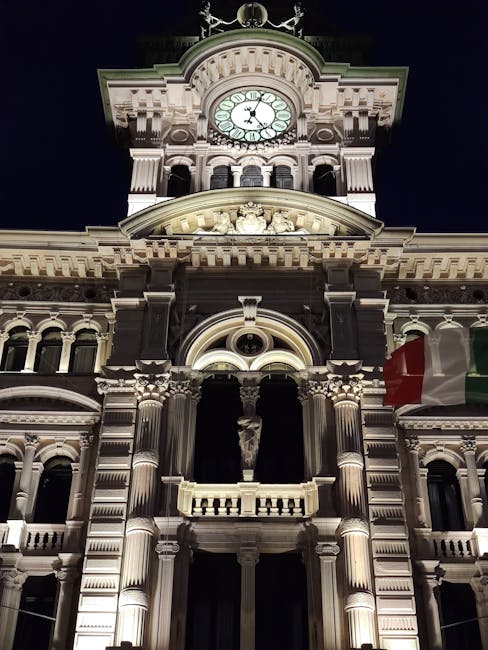
Begin your walk in the heart of Trieste, at Piazza Unità d’Italia (Piazza Unità d’Italia, 34121 Trieste). By day as by night the square is the city’s meeting point; after dark the façades around it—the Hotel Duchi d’Aosta, the Town Hall—are beautifully lit and the streetlamps turn the stone to gold. The square is free and open 24/7: there’s no charge to wander. Cafés along the square like Caffè degli Specchi (Piazza Unità d’Italia 4, 34121 Trieste) often close between 22:00 and 01:00 depending on the season; expect to pay around €2.50 for an espresso at the counter and €4.50 for a glass of wine.
From the piazza head out to the quays toward Riva del Mandracchio and Riva Tre Novembre: the sea feels close here, the horizon widens and the silhouettes of moored boats hang like shadows. Along the waterfront you’ll find Molo Audace (Riva Nazario Sauro, 34123 Trieste), an iconic pier where locals come to watch the sunset. It’s a perfect spot for night photography: the contrast between city lights and the dark sea, reflections on the water and sometimes low sea mist make for dramatic images.
Practical tip: Piazza Unità is well served by local buses (Trenitalia or Trieste Trasporti buses). The nearest taxi rank is often at Piazza della Libertà (Piazza della Libertà, 34125). If you’re planning a late dinner, book a table before 21:00 in summer—the demand can be high. Photographers should bring a compact tripod: long exposures along the quays produce spectacular shots.
Canal Grande, Borgo Teresiano and the Hidden Lanes
The Canal Grande (Canal Grande, near Ponte Rosso, 34121 Trieste) sits in Borgo Teresiano, the neighborhood shaped by Venetian and Austro‑Hungarian influences. At night the bridges and façades mirror in the canal and the atmosphere can feel almost Venetian—wilder and more intimate. Stroll along Riva del Mandracchio and Via del Mare, where street lighting and historic lamps create a melancholic mood. Canal‑side restaurants like Al Bagatto (Via Madonna del Mare 1, 34121 Trieste) may offer dishes priced between €12 and €25; check closing times, often up to 23:00.
Nearby, the Borgo Teresiano reveals narrow alleys and discreet stairways (Salita della Salata, Via San Nicolò). These side streets hide flowered balconies, carved doors and small squares to sit in. From the higher streets you can see the Teatro Romano di Trieste (Via del Teatro Romano, 34121 Trieste); although it’s not usually open for nighttime visits (daytime hours are generally 9:00–19:00, ticket €3–6), its illuminated outline at night makes a striking photographic subject.
Local tips: walk slowly and watch your step—some paving is uneven. For a culinary stop try jota triestina (a bean and cabbage soup) in a local osteria for about €8–12. Wine bars tucked into the alleys often serve cheese and cold‑cut platters for €6–15. If you want something less touristy, head to Via Commerciale where delicatessens and antique shops tend to stay open later (seasonal variation applies).
Castello di San Giusto, the Hill and Nighttime Vistas
Climb up to Castello di San Giusto and the Cathedral of San Giusto (Castello di San Giusto, Piazza della Cattedrale, 34121 Trieste). You can reach the castle on foot via Via del Castello or in a few minutes by taxi from the center (taxi rank at Piazza della Libertà). Castello di San Giusto (Piazza della Cattedrale, 34121 Trieste) houses a museum; daytime hours vary but are generally 10:00–17:00 outside peak season and 10:00–19:00 in summer, with an entrance fee around €3–6. At night the castle usually doesn’t open its indoor rooms, but the climb up the hill rewards you with an unforgettable panorama: the lit city, rooftops, the harbor and the dark mirror of the Adriatic.
The Cathedral of San Giusto (Piazza della Cattedrale, 34121 Trieste) stands next to the castle. The church is accessible at varying times (typically mornings 8:00–12:00 and afternoons 16:00–19:00); evening masses (check local notices) can offer a quiet, lit interior at the blue hour. The small square in front of the cathedral is a great place to listen to the city: silence is punctuated by the distant roll of waves and sometimes by the bells marking the night.
Practical tips: bring a jacket—the sea breeze gets chilly at night, especially up on the hill. Walking up from Piazza Unità d’Italia takes about 15–25 minutes and involves steps. If you plan to enter the castle or cathedral, check official sites for current hours; otherwise focus on exterior views and photography. For a meal after the climb, Ristorante Al Castello (Via del Torrione 2, 34121 Trieste) may serve local dishes priced €15–30 and sometimes stays open until 22:30 in high season.
Risiera di San Sabba and Nighttime Remembrance
Risiera di San Sabba (Via Fabio Severo 40, 34139 Trieste) is a national memorial site: a former factory converted into a collection and extermination camp during World War II, now preserved as a museum‑memorial. Visits are generally daytime and supervised: usual hours 10:00–18:00 (seasonal variations), ticket €3–6. Night visits inside are not possible, but the façade and surroundings take on a particular solemnity at dusk: modest lighting invites reflection and reverence. Any evening walk in this area should be done with respect—avoid loud or celebratory behavior near the site.
If you want to extend your cultural itinerary, Museo Revoltella — Modern Art Gallery (Via A. G. Revoltella 13, 34133 Trieste) sometimes offers late openings (check the program; ticket €6–10). Cultural institutions occasionally organize themed evening visits or lectures: consult official calendars several days ahead to spot any nocturnal programming.
Practical advice: to reach Risiera from the center, take a local bus (Trieste Trasporti urban lines toward Barcola/Servola) or a taxi (fare €10–20 depending on time). Respect the signs and marked paths around the Risiera—this area is maintained as a memorial and access outside opening hours is prohibited. Bring a torch or use your phone’s light to read information panels if you’re there at dusk. On the way back to the center, stop at one of the Borgo Teresiano osterie for a gentler end to the evening.
Conclusion: Why Night Is the Time to Discover Trieste
Night changes Trieste: it smooths familiar outlines and reveals a more intimate face—sometimes harsher, sometimes more poetic. Monuments take on new presences—the Piazza Unità d’Italia becomes a seaside theater, the Canal Grande a reflective ribbon of stories, Castello di San Giusto a lookout from which to read the city like a map of emotions, and Risiera di San Sabba a humble, solemn reminder of human history. A night walk doesn’t replace daytime visits: it complements, nuances and deepens them.
In practical terms, to fully enjoy Trieste after dark, wear comfortable shoes, bring a windproof jacket, carry a power bank for your phone, and show respect at memorial sites. Check opening hours for places you want to enter during the day—some museums and monuments close early, but exterior viewpoints and panoramas remain accessible. For food and drink favor historic cafés (Caffè San Marco, Via Battisti 18, 34132 Trieste; hours vary, often open until midnight) and local osterie to taste Carso‑Adriatic cuisine. If you’re out late, arrange a taxi back—a ride from the center to the main station usually costs between €6 and €12 depending on the hour.
Finally, give yourself time to simply sit and listen: the sound of the sea, distant conversations, and sometimes a street musician. Trieste has stories to tell to those who wait, and night is often the best time to hear them. Whether you’re a photographer, a history buff, a couple seeking a romantic moment or a solitary traveler in search of meaning, a night walk through Trieste’s mysterious neighborhoods will leave lasting images and impressions. Grab a map, follow the lights, and let the city speak to you.