





INTRODUCTION
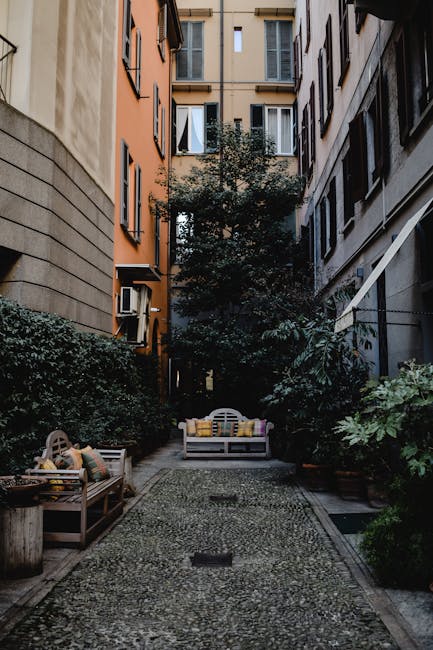
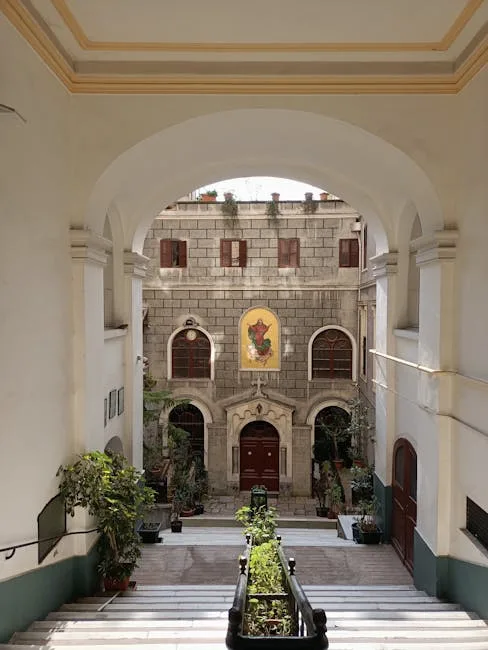
Trieste is a city you uncover layer by layer: first the Adriatic, the grand Piazza Unità d’Italia and its literary cafés, then the wooded hills and Miramare Castle. But tucked between neoclassical façades and cobbled alleys are more intimate worlds — the corti, those small inner courtyards that were once the beating heart of daily life, commerce and social life. Exploring Trieste’s forgotten corti in the historic center is a hunt for discreet yet essential spaces where history is written on the walls, balconies and uneven flagstones.
Often invisible to hurried passersby, these corti tell the city’s layered story: a commercial crossroads of the Austro-Hungarian Empire, a cosmopolitan port, a haven for writers and cafés. They still hold traces of the artisans who worked there, the families who lived there and the institutions that occupied them. Inside you’ll sometimes find tiny fountains, winding staircases, faded frescoes and carved doorways; they serve as windbreaks from the gulf, summer terraces and convivial meeting spots when the weather is mild.
This article offers a sensory, practical dive into these little-known pockets of Trieste’s old town. It’s aimed at curious walkers who like to explore on foot, photographers seeking intimate frames, and lovers of hidden architecture. You’ll find detailed descriptions of several corti reachable from main streets, addresses to help you locate them, practical info (typical access times, rules for respecting the spaces, possible fees) and tips to make the most of your visit — best times of day for light, weather to favor, and how to behave if a courtyard appears private.
The walk we suggest moves through familiar areas — around Piazza Unità d’Italia, the Roman Theatre and the Santa Maria Maggiore quarter — but mainly slips into dead-ends and covered passages where Triestine authenticity still shows itself unvarnished. As you move from one corte to another, you’ll learn to spot the little clues that open a door: an old knocker, a marble plaque, a row of timeworn mailboxes. And because a picture often says more than a long description, we’ve included visual suggestions at key points along the route to help you picture the places and plan your shots.
Before you set off, a few common-sense rules: respect residents’ peace, avoid entering clearly private areas without permission, don’t disturb installations, and keep in mind that some courtyards are only open at certain hours. Finally, bring comfortable shoes — cobbles, stairs and slopes are part of the Trieste experience.
Corte di Palazzo Carciotti and Its Surroundings (Riva del Mandracchio)
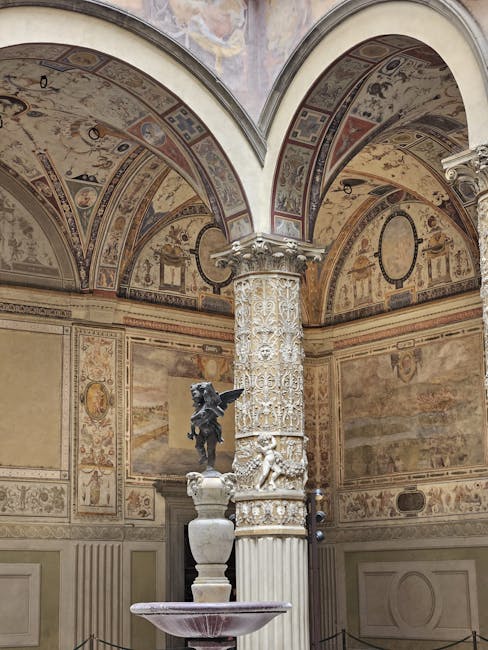
Just steps from the sea on the Riva del Mandracchio sits the Corte di Palazzo Carciotti, a compact courtyard that captures the understated charm of Trieste’s waterfront buildings. Palazzo Carciotti, recognizable by its restrained yet imposing façade, opens onto a paved courtyard where you can still sense the smell of salt and the memory of old boats. Address: Riva del Mandracchio 3, 34124 Trieste. Access: the courtyard is generally reachable from the main street; status: semi-public, with some areas possibly private.
Hours and fees: there’s no official museum management for the courtyard itself, so access is free when the gate is open. Visits are usually self-guided in the morning and late afternoon; avoid nighttime visits out of respect for residents. If you plan an intense photo session or a small shoot, it’s best to ask permission in advance at the building’s concierge (when present).
Immersive description: on entering you immediately notice the smaller scale compared with the square, but maritime details — sculpted mooring rings, marble plaques commemorating old shipping companies — remind you of the port’s commercial importance. The walls play with shadow and light cast by wrought-iron balconies. In the center, a small stone basin often surrounded by geranium pots becomes a gathering point for locals on warm evenings.
Practical tips: visiting in the late afternoon gives you warm light that enhances textures; in the morning the gulf breeze can be brisk, so bring a windbreaker. To continue the stroll, walk up the Riva del Mandracchio toward Piazza Unità d’Italia (Piazza Unità d’Italia, 34121 Trieste) where cafés and restaurants await. For a classic coffee break try Caffè degli Specchi (Piazza Unità d’Italia 1), but note prices: espresso about €1.40–1.80 at the counter, €3–5 at a table depending on location.
Corte di Via della Cattedrale and the Walk Up to San Giusto
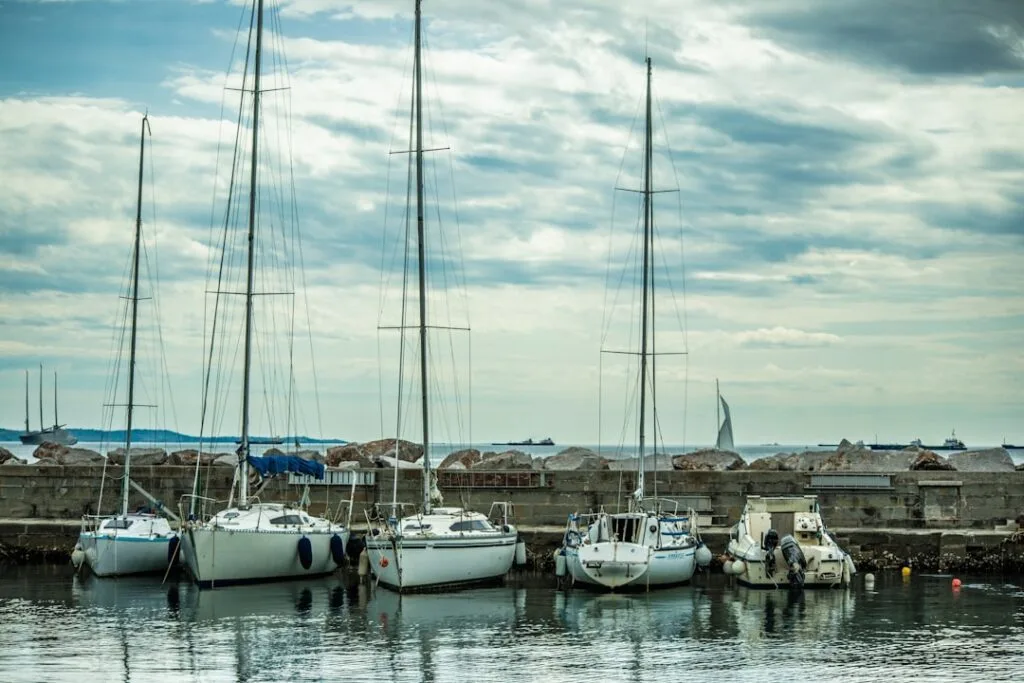
Not far from San Giusto Cathedral, in the medieval quarter around Piazza della Cattedrale, several small corti deserve attention. One of the most evocative sits at the junction of Via della Cattedrale and Vicolo della Canonica. Approximate address: Vicolo della Canonica 4, 34133 Trieste (about 100 meters from Cattedrale di San Giusto, Piazza della Cattedrale 1, 34133 Trieste). Access: open during daytime, though parts may be closed for religious events.
Hours and fees: the cathedral welcomes visitors daily (hours vary by season; generally 8:00–19:00, sometimes closed 12:30–15:00). Courtyard access is free. If you want to climb the Castello di San Giusto (Piazza della Cattedrale, 1), the site offers a combined ticket for the museum and the viewpoint: roughly €4–8 depending on concessions; typical hours: 9:00–18:00 (seasonal).
Immersive description: these corti feel more restrained, almost monastic: stone walls, quiet corners, small wooden-shuttered windows and ivy climbing the joints. It’s a place to tune into the muffled sounds of the city — a distant sermon, tourists’ footsteps up to the castle, a bird singing from a stone ledge. Stone staircases lead to terraces that offer surprising views over tile roofs and the sea in the distance.
Practical tips: this area can be very busy in high season (April–September). For softer light and relative calm, aim for the first hour after morning opening (around 8:30–9:30). Watch your step — slabs can be uneven — and respect residents by avoiding loud behavior or setting up equipment without permission. If you plan to visit Castello di San Giusto, allow at least an hour for the museum and the panoramic views.
Corti around the Roman Theatre and the Old Quarter
The Roman Theatre and its surroundings form a neighborhood where ancient traces mix with Venetian buildings and Austro-Hungarian urbanism. Exploring the adjoining alleys — Via del Teatro Romano, Via San Nicolò and the little side streets — you’ll find corti often hidden behind iron gates. A notable courtyard is tucked behind a building on Via del Teatro Romano, address: Via del Teatro Romano 5, 34121 Trieste (immediately adjacent to the Roman Theatre). Access: variable; some private courtyards open during cultural events.
Hours and fees: the Roman Theatre itself can be admired freely from Via del Teatro Romano (open-air archaeological site). Access to private courtyards is free when they’re opened to the public (for Heritage Days, local events), but sometimes you’ll need a guided visit run by cultural associations: fees typically €5–10 depending on the route. Check local notices (IAT Trieste – tourist office) for special openings.
Immersive description: the theatre’s proximity is tangible: worn stones, arches and column fragments resonate in the space, and some courtyards incorporate archaeological elements into their layouts. Shadows from surrounding buildings create cool pockets welcome in summer; artisan shops and studios sometimes line the edges, letting out the smell of worked wood or fresh paint. The contrast between the vertical rise of buildings and the horizontality of ancient ruins gives these corti an echoing historical feel.
Practical tips: pair courtyard visits with a stop at the Teatro Romano (Via del Teatro Romano 1, 34121 Trieste). The site is best in the morning to avoid tour groups. For lunch after your walk, try Trattoria da Giovanni (approximate location: Via dell’Orologio / Teatro Romano area) where a pasta or risotto dish typically costs €10–16. Photographers should hunt for small details: knockers, brass plaques and old shop numbers — they’re revealing traces of the city’s commercial past.
Covered Passages and Corti off Via Torino and Via San Nicolò
Via di Roma and its neighboring streets, including Via Torino (Via Torino 4–10) and Via San Nicolò (Via San Nicolò 10–20), hide several covered passages that lead to unexpected courtyards. These passages — remnants of the old urban trade network — once linked shops and warehouses while protecting goods from the weather. Landmark: a covered passage near Via Torino 6, 34121 Trieste. Access: most are open but follow signage and respect any restrictions.
Hours and fees: like many urban corti, access is free. Some passages now house workshops or galleries with their own opening hours: typically 10:00–13:00 and 16:00–19:00 on weekdays, and 10:00–13:00 on Saturdays. A few galleries close on Sundays; courtyards remain visible from entrances outside opening hours.
Immersive description: stepping through these passages changes the atmosphere: street noise mutes and you enter a nearly theatrical space, punctuated by doors and pilasters. Floors sometimes preserve original mosaics or slabs, and wrought-iron signs recall old trades (cobbler, tailor, haberdasher). Adjacent corti, often filled with potted plants, provide shaded rest spots where locals enjoy a drink at dusk.
Practical tips: this area is perfect on rainy days — the covered passages keep your walk pleasant. Look up for painted balconies, faded frescoes or tall windows that open onto inner courtyards. If you want a historic café afterwards, head to Caffè San Marco (Via Battisti 18, 34125 Trieste): founded in 1914, it’s still a literary meeting place. Price guide: espresso €1.50–2.50 at the counter, cappuccino €1.80–3.50 depending on service.
CONCLUSION
Exploring Trieste’s forgotten corti in the city center is about stepping off the main tourist avenues and into urban intimacy. These small courtyards, often hidden behind modest gates or covered passages, are time capsules: they preserve fragments of craftsmanship, inscriptions, worked knockers, stairways and balconies that tell the real story of the port city. A careful visit will reveal not just architecture but social life too — laundry lines, neighborhood chats, cats napping in the sun — all signs of continuity between past and present.
Practically speaking, discovering the corti is a walking activity that requires little gear: good shoes, a hat for summer, a windbreaker for the gulf breezes, and a camera to capture the light and textures. Respect residents’ privacy, ask permission if you want to enter an obviously private courtyard or stage a photoshoot, and consult the Trieste Tourist Office (IAT Trieste) for special openings and guided tours. Prices quoted for museums and cafés are indicative and can change with season or establishment policy; always budget a little extra for the unexpected.
Ultimately, walking through Trieste’s corti offers a different way to get to know the city: perhaps less flashy, but undeniably more intimate and revealing. Take your time to stop, listen and observe — you’ll find stories carved in stone, the marks of artisans’ hands and the smiles of generations still living behind these walls. Whether you’re a photographer, an architecture fan, or simply a curious traveler, Trieste’s historic courtyards will repay you with character-filled everyday scenes and surprises around every doorway.